
What is gout?

A metabolic disorder that is often underestimated—and why a specialist evaluation is the most important step.
Dr. med. Lioba Pieterse
Specialist for Rheumatology & Nephrology
Private Practise Heidelberg-Handschuhheim

In the middle of the night: a burning pain in the big toe. The joint is swollen, red, and hot. Many people who experience this hope it will go away on its own—and that’s exactly where the real risk begins.
What is gout?
Gout is a metabolic disorder—and therefore much more than just a temporary joint problem. The first attack is often just the visible tip of a process that has been developing behind the scenes for some time. If gout is not diagnosed and treated by a specialist, it can cause permanent damage to the joints and kidneys.
This article provides a clear overview of what gout is, how it manifests itself, and why an accurate diagnosis is so crucial. First things first: A one-size-fits-all self-treatment approach almost always falls short when it comes to gout—read on to find out why.
~950.000
People in Germany live with gout
8 from 10
Those affected are men—mostly over 40 years old
Years
The disease can progress unnoticed before the first attack occurs
What Is Gout? A Brief Overview
Gout is a metabolic disorder with rheumatic consequences. Simply put, too much uric acid builds up in the body—a condition known in medicine as hyperuricemia. If uric acid levels consistently exceed a certain threshold, it forms fine crystals that are deposited in joints and tissues.
These crystals trigger the characteristic, extremely painful inflammation—a gout attack. The most common site is the big toe, but in principle, many joints can be affected.
However, there is one thing this brief explanation cannot do: determine the specific cause in your individual case. Whether the primary factor in your case is a genetic predisposition, kidney function, certain medications, comorbidities, or a combination of several factors can only be determined through a targeted examination by a specialist. And it is precisely this cause that determines which treatment will actually be effective.
Elevated uric acid levels or an initial suspicion?
Have the cause investigated early on—before any further damage occurs.
Private patients and self-pay patients welcome・Online booking available 24/7
What Many People Don't Know Gout is also a kidney issue
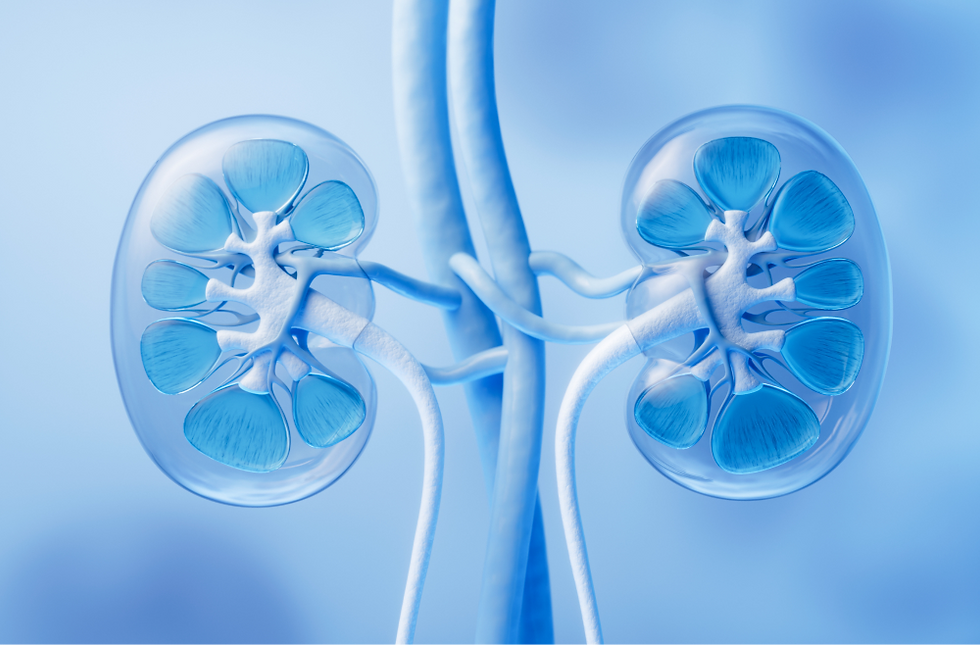
A large portion of uric acid is excreted by the kidneys. If this process does not function properly, uric acid builds up in the body—and conversely, untreated gout can in turn damage the kidneys. Gout is therefore a condition at the intersection of rheumatology and nephrology.
This dual perspective is crucial when evaluating gout—and it is the focus of my private practice in Heidelberg. I would be happy to discuss with you in person what this means specifically for your treatment.
Course of the Disease
Gout develops in phases
The tricky thing is that gout continues to progress even during symptom-free periods. The earlier it is detected, the easier it is to slow its progression.

Phase 1
Elevated uric acid levels—no symptoms yet
The levels are elevated, but there are no noticeable symptoms. This phase often goes unnoticed for years—and is frequently overlooked for that very reason.

Phase 2
The First Gout Attack
Sudden, severe, usually at night. By now, at the very latest, a specialist evaluation is strongly recommended—because the first attack is rarely the last.

Phase 3
The Deceptive Calm
After a seizure, there is a period without symptoms. Anyone who thinks they have “gotten through it” risks further seizures—the disease continues to progress unnoticed.

Phase 4
Chronic Gout
Permanent joint damage, tophi, and kidney problems. Today, this stage can almost always be prevented—provided treatment begins in time
Be Careful When Treating Yourself
There are numerous home remedies and pieces of advice for gout circulating on the internet. The problem is that some of them are outdated, others are ineffective—and some can even make an acute attack worse. Even over-the-counter pain relievers aren’t always the right choice, especially if kidney function is impaired or if you’re taking other medications.
What really helps during an acute attack—and what long-term treatment is appropriate to prevent further attacks—depends on your individual situation. A reliable recommendation can only be given after an examination. That’s exactly why I take the time to do this in my practice.

Nutrition & Lifestyle
Diet plays a role—but not a universal one
It is undisputed that diet affects uric acid levels. However, the well-known “gout diets” found online often fall short: they are frequently outdated, too strict, or fail to take your personal circumstances into account.
Some foods that are considered safe actually aren’t—and conversely, you can enjoy some foods that many people mistakenly avoid. Together, we’ll determine which adjustments make sense for you and are realistic to implement in your daily life—tailored to your test results, kidney function, and lifestyle.


When You Should Take Action
These symptoms should be evaluated by a specialist
It is advisable to see a doctor if one or more of the following apply to you:
sudden, severe joint pain—especially in the big toe
a joint is swollen, red, and warm to the touch
these symptoms recur frequently
you have been diagnosed with elevated uric acid levels
You have a known kidney condition or are taking long-term medication
You have high blood pressure, are overweight, or have diabetes
The sooner the cause is identified, the easier it is to manage gout—and the sooner you can avoid further attacks and long-term complications. Don’t wait for the next attack.
Not sure if it's gout?
During a personal consultation, we'll discuss your symptoms and the next steps.
Private patients and self-pay patients welcome・Online booking available 24/7
Your contact person
Gout from a Rheumatological and Nephrological Perspective
In my private practice in Heidelberg, I do not view gout as an isolated joint problem, but rather for what it is: a metabolic disorder with systemic implications. My dual specialization allows me to provide comprehensive care under one roof:
A Rheumatological Perspective
Assessment of joint symptoms, targeted diagnostics, and treatment tailored to your needs.
A Nephrological Perspective
Assessment of kidney function and associated risks—so that your treatment also protects your kidneys.
This connection is crucial in gout—because the kidneys are both the cause and a potential target of the disease. I would be happy to discuss with you in person which diagnostic tests and treatments are appropriate for your specific case.

Häufige Fragen zu Gicht:
A short answer—more details in our conversation
Is gout curable?
Gout cannot be cured in the traditional sense, but it can be managed very effectively—often to the point where those affected can live symptom-free for the rest of their lives. This requires consistent, personalized treatment. We’ll work with you to determine what that treatment looks like in your case.
What is the difference between gout and rheumatism?
Gout is classified as a “rheumatic condition,” but it differs from rheumatoid arthritis: In gout, the cause is metabolic; in rheumatoid arthritis, it is a malfunctioning immune system. Distinguishing between the two requires a diagnosis by a specialist—and is crucial for selecting the correct treatment.
Can gout damage the kidneys?
Yes—and this is often underestimated. Uric acid can put a strain on the kidneys, and impaired kidney function, in turn, increases the risk of gout. That’s exactly why it’s important to consider both aspects when dealing with gout. At my practice, you can get this comprehensive evaluation all in one place.
Which doctor should I see for gout?
For a definitive diagnosis and treatment, an internist specializing in rheumatology is the right person to see—and if you have impaired kidney function, a nephrologist as well. I combine both specialties in my private practice in Heidelberg. Schedule an appointment
Is changing your diet enough?
In some cases, this approach can be very effective; in others, it is not—it depends heavily on the specific cause. It would be irresponsible to give a blanket answer here. The best course of action for you can only be determined after an examination.
Suspect you have gout? See a specialist to get it checked out.
Dr. med. Lioba Pieterse
As a board-certified specialist in internal medicine with a focus on rheumatology and nephrology, I offer comprehensive rheumatological diagnostics and consultations at my private practice in Heidelberg.
Training at Charité – Universitätsmedizin Berlin
Specialization in autoimmune diseases, joint disorders, and their connection to kidney and blood pressure disorders
Google reviews with an average rating of 4.5 out of 5 stars
Private patients and self-pay patients – short wait times, in-depth appointments
Do you have questions about your symptoms—or would you like to schedule an appointment at our private practice for rheumatology and nephrology in Heidelberg?
Dr. Pieterse's Private Practice · Heidelberg Handschuhsheim · Book online
Charité Berlin
UKE Hamburg-Eppendorf
Uniklinik Heidelberg
Private practice since 2020
o

